


Sniffspot - Private Dog Parks
4.6600.00 Reviews
App Specs
- Version
- 2.21.1
- Updated On
- License
- Free
- Downloads
- 100,000+
- Developer
- Sniffspot Inc.
- Categories
- Lifestyle
- Platform
- Android
Screenshots

 Analysis by AppCompare
I like dog apps that solve a specific problem instead of trying to become an entire pet-care universe. Sniffspot - Private Dog Parks takes that focused approach: it helps dog owners look for private spaces where a dog can exercise, sniff, swim, hike, train, or simply play away from a crowded public park. In my experience, that makes it most useful when the usual walk is no longer enough, but a busy off-leash area feels stressful or unsafe.
The app comes from Sniffspot Inc. and sits in the lifestyle category. It is free to install, rated for Everyone, and has built a solid audience with over one hundred thousand installs. Its average score is 4.6 from around 4.6 thousand ratings, which suggests that the basic idea is connecting with owners who need more control over where their dogs run.
What matters, though, is not the rating alone. The real question is whether the app fits the way you and your dog actually spend time outdoors. I approached it as I would before a weekend outing: starting with a dog that needs more room, searching for a suitable place, checking the practical details, arranging the handoff between owner and host, and then deciding whether the experience is worth repeating.
From a restless dog to a more controlled outing
I see the first challenge as turning a dog’s restless energy into an outing that feels manageable for both of you. A little advance thought can make the search more useful: decide what your dog needs today, then judge a space by whether it supports that goal rather than by convenience alone. That same practical mindset also helps set realistic expectations for how the app performs during a busy planning session.
Starting with the right problem
The strongest use case is easy to recognize. Your dog has energy to burn, but the local public park is crowded, the pavement-heavy neighborhood route is repetitive, or your dog becomes distracted around unfamiliar animals. A private dog park can change the entire outing because the goal is no longer to squeeze exercise into a shared space. You can choose an environment that better matches your dog’s temperament and your own comfort level.
I would especially consider it for a nervous dog, a dog still learning reliable recall, or a young dog that needs room to move without being pushed into a chaotic social situation. It can also make sense for owners who want a more intentional training session. Instead of treating every walk as a test of patience, you can use a private setting to work on attention, recall, play, or calm exploration at your own pace.
That does not mean every dog needs this kind of service. If your dog is content with neighborhood walks and occasional time in a familiar public park, the extra planning may not add enough value. The app is also not a substitute for understanding your dog’s behavior. A private space may reduce distractions, but it does not automatically make an unsuitable dog-space combination safe or enjoyable.
Worth Reading Before You Choose

EA SPORTS FC Mobile 26 Is a Bigger Football Game, but It Takes Time

Flipboard Shows What News Apps Must Do Beyond the Feed

Switching to Android Auto Means Rethinking Your Driving Routine

Google Calendar Makes a Crowded Week Easier to Manage

Ludo King Makes the Most of the Minutes Between Plans

Baby Panda World Brings Quick Play to Modern Phones, but Its Game Library Feels Busy
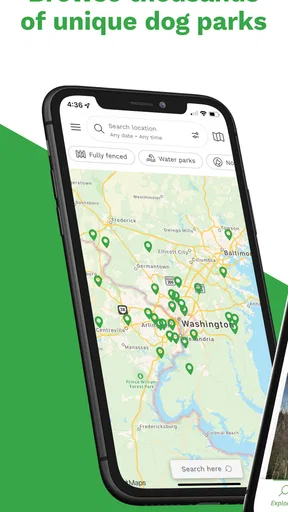
Searching with the dog, not just the map, in mind
The first practical habit I would recommend is to search according to your dog’s needs before choosing according to convenience. Distance matters, but it should not be the only filter in your decision. A nearby space may still be a poor match if your dog needs a quiet setting, room for structured training, or a different kind of outdoor activity.
Sniffspot’s concept covers more than a fenced patch for running. The store positioning includes options for swimming, hiking, training, and play, so I would approach each listing as a possible environment rather than assuming every location works the same way. The useful question is not simply “Is there a dog park nearby?” but “What kind of outing am I trying to create?”
For example, a dog recovering from an overstimulating week may benefit from a calm sniffing session rather than a high-energy play session. A young dog may need open space for recall practice. A water-loving dog may get more from a swimming-oriented visit than from another ordinary walk. Thinking in those terms prevents a common mistake: booking a place because it looks attractive on a map without considering whether it supports the actual outcome you want.
My best planning tip is to define the session before opening the search. Decide whether you want exercise, training, decompression, or a change of scenery. That single decision makes it easier to judge a location and stops the outing from becoming an expensive or inconvenient version of the same walk you already take.
Reading a listing as an owner would
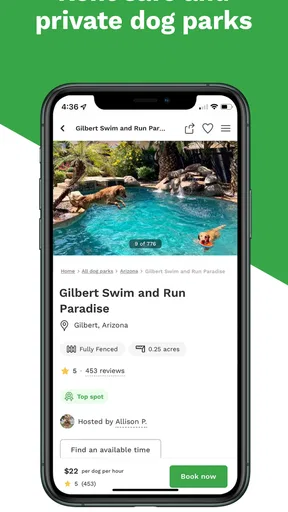
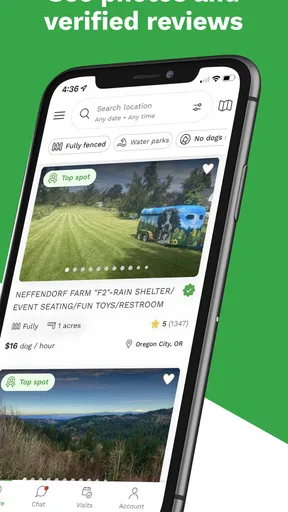
The next step is where careful users will spend most of their attention. A private dog space is not interchangeable with another one, and a short glance can hide practical questions. I would check the location details, the type of activity that appears suitable, and whether the setting seems compatible with the dog I am bringing. I would also think through arrival and departure before committing, because a smooth visit depends on more than the space itself.
This is one of the app’s strengths as a concept: it encourages a more deliberate choice than simply driving to the nearest public park. At the same time, that control creates responsibility. You are not just choosing entertainment; you are evaluating an environment for an animal that may react strongly to fencing, water, terrain, noise, or unfamiliar surroundings.
For a first visit, I would keep the plan conservative. Bring the essentials your dog normally needs, avoid scheduling the outing when you are rushed, and leave enough time to inspect the surroundings before expecting your dog to settle into play. If the location is intended for training, decide in advance which behavior you want to practice. A clear plan makes it easier to tell whether the space genuinely helped.
Making the handoff between app, owner, and host
The workflow has an important handoff: the app helps you find and arrange access, but the owner still has to turn that arrangement into a safe visit. That means translating what you see on the screen into real-world decisions. A listing can point you toward a promising place, yet your dog’s reaction on arrival remains the final test.
I see this handoff as both useful and potentially frustrating. The app can reduce the uncertainty of searching for private exercise space, but it cannot walk the dog, judge the ground under your feet, or notice that your dog is too tired, anxious, or excited to enjoy the session. The owner remains responsible for checking the environment and adjusting the plan.
This matters when more than one person is involved. If a family member, dog walker, or friend is taking the dog, I would make sure that person knows the intended purpose of the visit and understands the arrival routine. A handoff that is clear on the phone can become confusing at the gate or parking area if the visitor has not reviewed the details beforehand. The app is most effective when everyone treats the booking as a shared plan rather than a private note on one person’s device.
For households with multiple dogs, I would also avoid assuming that one successful visit proves the space works equally well for all of them. Different dogs can need different levels of room, stimulation, and supervision. The ability to find a private setting is valuable precisely because it lets you match the outing more closely to the individual dog.
Turning the visit into a useful result
The outcome I would look for is not merely a tired dog. A successful visit should leave you with a better sense of what your dog needs and whether the chosen space supports that need. Maybe the dog finally gets uninterrupted recall practice. Maybe a timid dog explores more confidently. Maybe a high-energy dog returns home calmer after a focused run. Those are more meaningful results than simply spending time outdoors.
Private access can also improve the quality of observation. In a crowded park, it is difficult to tell whether a dog is enjoying play, coping with pressure, or constantly scanning for other animals. A quieter environment gives you more room to notice body language and adjust the session. That can be particularly useful for owners who are trying to understand whether their dog prefers social play, solo exploration, water, or structured interaction with a person.
I would use the first visit as a trial rather than immediately treating it as a permanent routine. Notice how much preparation it required, how your dog behaved before and after, and whether the setting offered something your normal alternatives do not. If the result is a calmer dog and a less stressful owner, the extra planning may be justified. If the dog is indifferent and the journey is awkward, a regular walk or familiar park may still be the better choice.
Where the flow breaks down
The biggest weakness is that the experience depends heavily on the quality of each individual location and on how well the owner checks the details. The app can make private spaces easier to discover, but discovery is not the same as consistency. One place may be ideal for energetic play, while another may suit quiet sniffing or training much better. That variation is part of the appeal, but it also means you cannot assume the same experience every time.
There is also more friction than with a standard public park. A public park may require little thought beyond grabbing a leash and leaving home. With this app, you need to search, compare, plan the visit, and coordinate access. For an owner who wants a spontaneous ten-minute break, that process may feel excessive. The app is better suited to purposeful outings than to moments when you need the fastest possible option.
Another limitation is emotional rather than technical: private space can create the expectation that everything will be easy. Your dog may still be distracted, refuse to swim, ignore training cues, or become unsettled by a new environment. I would not judge the service harshly because a dog behaves unpredictably, but I would judge a visit by whether the setting gives you a reasonable chance to respond and adapt.
Compared with public dog parks, the clear trade-off is control versus spontaneity. A public park is often simpler and may offer natural social interaction, but you have less influence over the crowd and the pace of the outing. Compared with a normal walk, a private space can provide more freedom and variety, yet it requires more preparation. Compared with professional training, it offers a place to practice but not the guidance of a trainer. Knowing which alternative you are replacing helps set realistic expectations.
Who should use it, and who should skip it
I would recommend trying Sniffspot if your dog needs room to exercise but does poorly in crowded public settings, or if you want to build more structure into outdoor time. It is also worth considering when you are looking for a setting that supports a particular activity rather than another standard leash walk. Owners who enjoy planning outings and paying attention to environmental details will probably get the most from it.
I would be less enthusiastic for someone whose main priority is instant, low-effort access. If your nearest public park already works well, your dog enjoys ordinary walks, or you rarely have time to compare options, the app may add planning without enough benefit. I would also avoid treating it as an automatic solution for serious behavior problems. A private location can reduce outside pressure, but dogs with major reactivity, escape behavior, or safety concerns still require thoughtful management and possibly professional help.
The app is free to install, which makes trying the search experience a low-commitment decision. The more important commitment is your time and attention during the outing. I would start with one clearly defined goal, choose a setting that appears to support it, and evaluate the result honestly instead of assuming that every private park will become part of your routine.
What to expect from the app itself
Sniffspot has been available since October 16, 2018, and the current version is 2.21.1. It supports devices running Android 7.0 or later. Those details make it accessible to many Android users, although anyone with an older phone should check compatibility before planning around it.
The Everyone content rating also fits the app’s general purpose: it is a lifestyle tool for arranging dog exercise rather than a specialized professional system. I would still treat the outdoor activity itself with adult judgment, especially when children, multiple dogs, water, unfamiliar terrain, or shared family responsibilities are involved.
One subtle strength is that the app changes how you think about exercise. Instead of asking only how far you can walk, you can ask what kind of environment will help your dog succeed. That shift is useful even when you ultimately choose a public park or a regular route. The app’s value is therefore partly in the search and planning process, not just in the final destination.
My recommendation after following the full workflow
After looking at the complete journey from a restless dog to a planned private outing, I see Sniffspot as a targeted lifestyle app rather than an everyday replacement for all dog walks. Its best contribution is giving owners another option between a crowded public dog park and a repetitive neighborhood stroll. That middle ground can be genuinely valuable when privacy, space, or a specific activity matters.
I would recommend it to a friend whose dog needs controlled exercise, whose local options are limited, or who wants to experiment with training in a less distracting environment. I would tell that friend to begin with a clear goal, inspect each location carefully, and treat the first booking as a learning session. The app can make the search more practical, but the quality of the result still depends on matching the dog, the activity, and the setting.
My final view is positive, with one condition: use it deliberately. If you want a quick default walk, it may be more process than you need. If you want a better-matched place for your dog to explore, train, swim, hike, or play, it offers a thoughtful alternative to the usual routine. For me, that focused purpose is what makes Sniffspot - Private Dog Parks worth keeping in mind when ordinary dog-park options are not enough.
Pros
- Book private
- exclusive spaces for safer off-leash exercise.
- Useful filters help find parks suited to your dog’s needs.
- Hosts often provide amenities such as water
- toys
- and fenced areas.
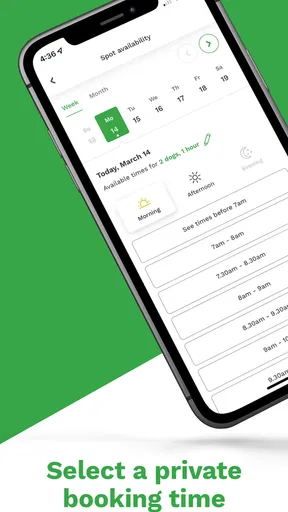
- Flexible hourly reservations work well for playdates or training sessions.
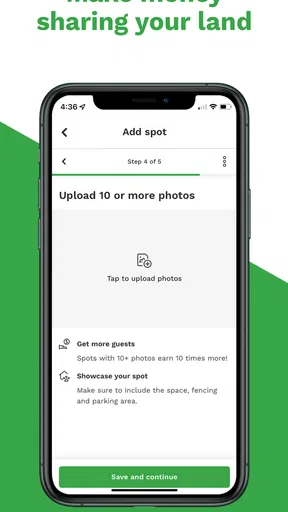
- Reviews and photos help assess each location before booking.
Cons
- Availability can vary greatly by location and time of day.
- Popular parks may require booking well in advance.
- Additional cleaning or pet-related fees may apply at some listings.
- Outdoor spaces can be affected by weather or seasonal conditions.
- Owners remain responsible for supervising dogs during every visit.
FAQs for Sniffspot - Private Dog Parks
What is Sniffspot – Private Dog Parks?
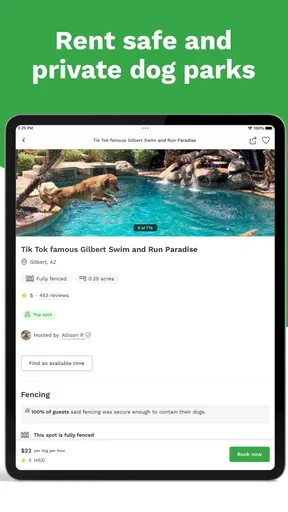
Sniffspot is a platform that lets dog owners discover and book private outdoor spaces where their pets can exercise, play, and train without sharing the area with unfamiliar dogs. Listings can include fenced yards, farms, trails, and other dog-friendly locations. Each spot has its own description, photos, rules, amenities, availability, and pricing, so the experience can vary considerably from one host to another.
Is Sniffspot suitable for reactive, anxious, or nervous dogs?
One of Sniffspot’s main advantages is that many locations are booked privately, which can be helpful for dogs that are reactive, anxious, recovering from an injury, or uncomfortable in crowded dog parks. However, private does not automatically mean perfectly quiet or completely isolated. Before booking, owners should read the listing carefully, check whether other animals may be nearby, and contact the host if their dog has specific behavioral or safety needs.
How do I find and book a private dog park?
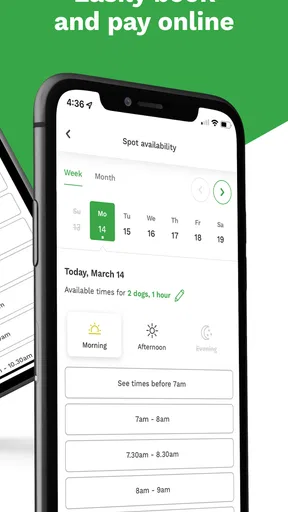
After entering a location, users can browse available Sniffspot listings and review details such as size, fencing, terrain, amenities, house rules, and guest reviews. Filters and map browsing make it easier to compare nearby options. Once a suitable spot is selected, you choose an available date and time, review the booking information, and complete payment through the platform. Availability, prices, and cancellation terms are set by each host.
How much does Sniffspot cost, and are there additional fees?
Sniffspot does not have one universal price because hosts decide how much to charge for their spaces, often based on location, size, amenities, and demand. Some spots may be inexpensive for short visits, while premium properties or larger areas can cost more. Before confirming a reservation, review the complete checkout total, including any applicable service charges, taxes, or other fees, so there are no surprises.
What should I check before taking my dog to a Sniffspot location?
Before visiting, read the host’s instructions and confirm important details such as fence height, gate security, parking, water access, waste disposal, terrain, and whether children or multiple dogs are allowed. Bring essentials such as water, waste bags, a leash, and any medication your dog needs. Even in a private space, inspect the area on arrival and supervise your dog throughout the visit for safety.


